A tutorial
Step 1:
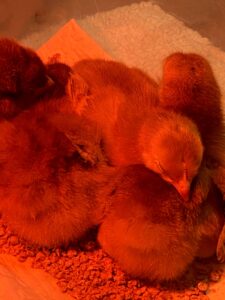
Locate chicks. Usually you can determine their location by the faint but almost constant peeping noises. Sometimes you can hear the gentle tapping of their beaks on the sides of the container they’re being housed in. If you listen carefully, you can pickup the soft sounds of feathers rustling as they snuggle together and get cozy in the cutest little pile of fluff you can imagine. Often their cheeps and squeaks can be heard inside your local post office, mostly in the spring. I know my heart sings when I hear them!
Step 2:
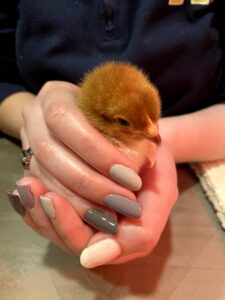
Slowly and carefully scoop up the chick or chicks, and hold them securely and close to you. Snuggle those cute little fluffy buns as much as you can. Socializing them now makes training them later on much easier. The more you can get them used to you, the better.
Hold them while you are engaged in a quiet activity like reading a book, or studying, or just winding down for the evening. It helps them feel more secure and safe. Many people who raise large numbers of chicks without the mother hen will hang a feather duster in the brooding box for this purpose. They will hang it so it sits a few inches off of the floor so the chicks can be warm and snuggly and have a sense of safety and protection from the outside world. It is makeshift momma hen’s chicken fluff!
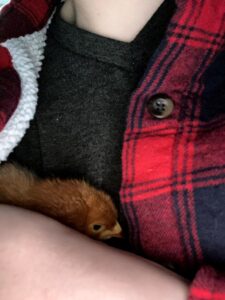
It’s important to get your snuggles in while you can!
They’ll go from cuddly little babies to awkward teenagers that don’t want to be around you in the blink of an eye.
Make sure you have paper towels handy when you have your chick with you for snuggle time. And watch for the chicken dance. When the chicks stand up and start to sort of shimmy and wiggle, that is your sign that they’re gonna poop! In my experience, this little move goes away as they get older, around two and a half to three weeks old.
Step 3:
When you are done with cuddle time… wait, is this even possible? Gently put the chick back in the brooder box with the others.
They will eventually get to a stage where they don’t like to be alone, and they’ll cry for the others. This means they’re ready to start exploring. This is when being a chicken parent gets a little more fun.
Remember, raising chickens is a big responsibility. It takes time, patience, and nurturing to raise healthy, happy chickens. You are their momma hen during this brief period when they are youngsters. It is your responsibility to keep them fed, watered, warm, safe and secure.
You must be their momma and her chicken fluff, their Chick & Fluff.